
Hello, and welcome back to the Monday Book Review.
Today I’ll be reviewing China Miéville’s newest young adult novel, Railsea.
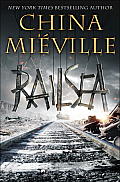 First sentence: This is the story of a bloodstained boy.
In a world where the earth is covered with endlessly criss-crossing railroad tracks and huge moles and other predatory beasts lurk underground, the newly christened doctor’s apprentice Sham, aboard the moletrain Medes, has found a treasure.
In a derelict traincar, amidst corpses and mole rats, Sham uncovered it: a memory card with photos of the train’s final, fatal, unbelievable find. Sham himself doesn’t understand how significant his discovery is, but he learns quickly that a lot of people are interested.
Rumor-sellers. The Shroake siblings. Pirates. Wreckers. The ferronavy. Even the Medes gets involved for the hunt for the End of the Line.
If you like action, adventure, and intrigue in an unbelievably well-imagined setting, Miéville’s reinvention of Melville’s Moby Dick will surpass your expectations.
 10. God Emperor of Dune by Frank Herbert. Earlier this year, I read the first three Dune books in the space of three weeks or so and decided to take a hiatus before plunging back into the series. The fourth book finds Leto II a deliberate tyrant over his empire; in the course of following his Golden Path, he encounters love, deception, and, above all desirable to his prescient mind, surprise. I first read this book several years ago and have enjoyed it much more this second time–so much so that I intend, finally, to finish out the original series of six books.
 13. The Razor’s Edge by W. Somerset Maugham. Narrated by Maugham as a character, this classic of modernism epitomizes a particular style of novel I associate with the Fitzgerald set and the ex-pat scene of the 1920s and ‘30s. After witnessing death in WWI, Larry sets out on a quest for happiness, reading books, traveling the world, and trying to understand his spiritual nature, while Isabel, his fiancée chooses a life for herself that is commensurate with her class and standard of living. Isabel’s uncle Elliott Templeton, a goodhearted snob, is perhaps one of the most shallow and sympathetic characters I’ve read in some time. Readers who find the alienation, disillusionment, and fragmentation of modernist novels unappealing will not enjoy this book, but those who enjoy reading about a world without a center will value the unreliable narrator and finely drawn characters.
 14. The Disreputable History of Frankie Landau-Banks by E. Lockhart. Thanks goes to my friend Connie for the loan of this delightful YA novel about Frankie, a fifteen-year-old girl who blossomed over the summer and has begun to attract the attention of the senior boys at her boarding school. When she realizes that because she is a pretty young girl she will never get invited to their boys-only secret society, she originates a series of pranks that quickly escalate in humor and significance as she explores the disparity between appearance and reality. Both intelligent and hilarious, this book of wit, wordplay, and societal norms will educate and entertain as Frankie discovers just what she’s capable of.
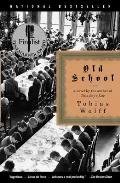 8. Old School by Tobias Wolff. After I heard Wolff’s stupendous short story “Bullet in the Brain” read aloud on a podcast, I instantly began searching for his work. Old School was amusingly and unintentionally related to The Sense of an Ending in that both had to do with private boys’ schools; but Wolff’s novel is a bildungsroman of an emerging writer and paid homage to several well-known figures in literature. It would be hard to say which of the two I liked better, for I enjoyed them both very much.
 First sentence: He was one hundred and seventy days dying and not yet dead.
 Mostly About Books