
Stuff I’ve Been Reading: March 2012
10. The Count of Monte Cristo by Alexandre Dumas. And now for the Classics Kick. I’m a bit dissatisfied with my Barnes and Noble abridged copy of Dumas’s great novel, but I did enjoy the story however much the language may have been diminished. I reserve great fondness for this novel because I remember it as being one of the longest books I’d ever read when I was ten or twelve or so. Not only was it a book I was proud of having read, but I’d even enjoyed the reading of it.
11. A Passage to India by E. M. Forster. Remembering that I’d liked Howards End when I read it a couple of years ago in graduate school, and seeing A Passage to India on a top 100 novels list, I felt like taking the challenge. It’s about Race, Class, and Gender. It’s about the oppressive colonization of India. It’s about Dr. Aziz, the gregarious Muslim Indian doctor, Miss Quested, the frigid fiancée of a rising Anglo-Indian civil servant, Cecil Fielding, an educator sympathetic to the Indian plight—and what happens in the Marabar caves that destroys the social fabric of the entire province. Everything is interpretable in several ways. A truly Important novel, and one to be read more than once.
12. The Vow by Kim and Krickett Carpenter. I took a brief hiatus from classics to read this true story I’d borrowed from a friend. After head trauma, Krickett Carpenter cannot remember meeting or marrying her husband of two months; nevertheless, their faith and their rediscovery of who they now are keep them together as a couple.
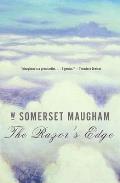 13. The Razor’s Edge by W. Somerset Maugham. Narrated by Maugham as a character, this classic of modernism epitomizes a particular style of novel I associate with the Fitzgerald set and the ex-pat scene of the 1920s and ‘30s. After witnessing death in WWI, Larry sets out on a quest for happiness, reading books, traveling the world, and trying to understand his spiritual nature, while Isabel, his fiancée chooses a life for herself that is commensurate with her class and standard of living. Isabel’s uncle Elliott Templeton, a goodhearted snob, is perhaps one of the most shallow and sympathetic characters I’ve read in some time. Readers who find the alienation, disillusionment, and fragmentation of modernist novels unappealing will not enjoy this book, but those who enjoy reading about a world without a center will value the unreliable narrator and finely drawn characters.
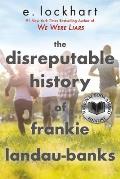 14. The Disreputable History of Frankie Landau-Banks by E. Lockhart. Thanks goes to my friend Connie for the loan of this delightful YA novel about Frankie, a fifteen-year-old girl who blossomed over the summer and has begun to attract the attention of the senior boys at her boarding school. When she realizes that because she is a pretty young girl she will never get invited to their boys-only secret society, she originates a series of pranks that quickly escalate in humor and significance as she explores the disparity between appearance and reality. Both intelligent and hilarious, this book of wit, wordplay, and societal norms will educate and entertain as Frankie discovers just what she’s capable of.
 Mostly About Books