
And to wrap up 2011, here’ s the Stuff I’ve Been Reading post for this month.
- Edgewood by Moi. Lest you think it mere padding to put my own novel on the list, I assure you that I sat down and read it front to end like a proper book. Which, of course, it is.
- The Magician King by Lev Grossman.
- The Hammer by K. J. Parker.
- Solstice Wood by Patricia A. McKillip (25%).
- The Darkness that Comes Before by R. Scott Bakker (20%).
- The Writer’s Notebook: Craft Essays from Tin House by Dorothy Allison, et. al.
- The Kingdom of Gods by N. K. Jemisin. The godling Sieh is the narrator of this exciting conclusion to Jemisin’s first–but I hope not her last–trilogy.
- Miracle and Other Christmas Stories by Connie Willis. As it was a book I received for Christmas last year, I thought this read would be apt in December: gently Christmas-themed stories, all.
- Hogfather by Terry Pratchett. Christmas in the Discworld is called Hogswatch–but what will happen to belief if the Hogfather is…inhumed…by the Assassins Guild? As it turns out, the sun may not rise. This book was also my first Christmas present (thanks, Sherri!).
- The Lathe of Heaven by Ursula K. Le Guin. Once you get past the turtle aliens, you realize this book is all about good stewardship of Earth’s natural resources.
- The Thousand Autumns of Jacob de Zoet by David Mitchell. It was beautiful historical fiction, about a Dutch clerk in Japan during the 1800s; but Cloud Atlas remains my favorite David Mitchell novel.
- Tooth and Claw by Jo Walton. The back-cover blurb by Jane Yolen advertises this novel as Pride and Prejudice with dragons, and it’s really spot-on: a positive delight to read.
- Over Sea, Under Stone by Susan Cooper. A reread, this first book in the Dark Is Rising Sequence is something I picked up on a lark as I was arranging my new acquisitions on the shelf.
- The Dark Is Rising by Susan Cooper.
Best Christmas Book: Hogfather
Best Sequel: The Kingdom of Gods
Best Fantasy: Tooth and Claw and The Magician King
Goodbye, 2011, and hello, 2012. I hope and trust that the new year will be filled with many excellent books.


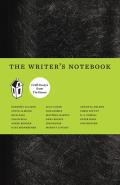 The Writer’s Notebook is a collection of craft essays from well-known writers and writing teachers associated with the Tin House Summer Writer’s Workshop or with Tin House Books. While the topics of the essays may differ greatly, ranging from historical fiction to fairy tales, from sex scenes to Shakespeare, the essays themselves share a uniform level of authority, polish, wit, and humor that makes them at once entertaining and enlightening. Each essayist speaks to an audience of aspiring writers with all the best empathy and goodwill of one who also has begun the great undertaking of practicing an art but who has gained a little knowledge on some effective practices and techniques.
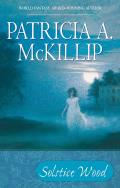 1. Not in the mood. Solstice Wood by Patricia A. McKillip surprised me by being set in the real world about real people (rather than in a magical world about magical people). An inherited house with a fairy wood makes for an excellent story, a la Tamsin by Peter S. Beagle, just not the story that I expected to be reading.
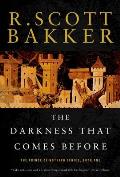 2. Not really my genre. The Darkness that Comes Before by R. Scott Bakker is the first in an epic fantasy trilogy. But there’s something about the epic style that I always seem to struggle against–and I think that this novel is quite a good specimen of that particular subgenre. People who like George R. R. Martin will appreciate the scale and pace of Bakker’s first novel. I am not one of them, though I tried very hard to be.
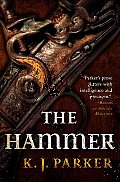 TBR #11. The Hammer by K. J. Parker.
 Mostly About Books