Your wishes are my command. I now commence blogging about How I Prepared for NaNoWriMo 2011.
It started with a place name, which isn’t normal. Normally I think of a character and imagine a world around him or her; this time my subconscious invented a forest named Edgewood, with a mock announcer voice-over asking, “What is it on the edge of?” So I set myself to find out.
Now, I’m a big fan of narratology, which is concerned with the effects of narrative structure. When I realized Edgewood was on the edge of fairy-tale style magic, with reality on one side and supernatural happenings on the other, my mind immediately leaped to Vladimir Propp. He wrote about narrative in Russian folktales, and I kind of love his book, which makes a formula out of narrative events, complete with outline.
So I had two pieces: Edgewood and folklore. This was in late September, and I knew I had a lot of thinking to do before I would be ready to write on November first.
Perhaps unsurprisingly, I think best on the page. So I took my Moleskine journal, labeled thirty-one pages with the dates in October, and set myself a task: I would write one page about my novel every day. And I have. And it’s worked.
Here are things I’ve written about:
- Character descriptions
- Place descriptions
- Lists
- Problems with the plot
- Outlines
- Maps and diagrams
- Complaints
- Scenes and scraps of dialogue
- Backstories
- Fake dust jacket synopses
- Things that have to happen and the order they have to happen in
- Notes on tone
- A list of books I hope people will compare my book to
- Whatever comes into my brain that is ever-so-slightly novel-related
And in the course of just under thirty-one days, I’ve found that I have a novel in my head. Not complete, of course, but with enough detail that I know what will be going on in each chapter. The benefit to consistently writing the page is that my subconscious would often be working on plotting or problems throughout the day, so that when I sat down to write, usually in the evening, I had often more to say than I realized before I started writing.
It’s a strategy I’ll certainly be using again.
Meanwhile, I plan to stick to my regular NaNoWriMo technique: write two days’ worth of words on Day 1 and one day’s worth faithfully after that. That way if I ‘fall behind,’ I will write double the word count the next day to ‘catch up’ to being one day ahead.
Slow and steady is my motto, where “slow” here can be defined as a (brain)death-defying pace of 1,667 words a day every day for thirty days.
NaNoWriMo, I love you. Can’t wait for November 1!

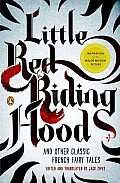 TBR #15. Little Red Riding Hood and Other French Fairy Tales translated by Jack Zipes.
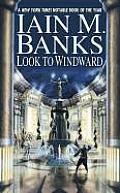 TBR #16. Look to Windward by Iain M. Banks.
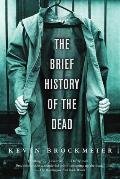 TBR #17. The Brief History of the Dead by Kevin Brockmeier.
 Mostly About Books