
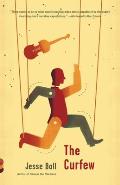
 TBR #28. The Curfew by Jesse Ball.
First sentence: “There was a great deal of shouting and then a shot.”
The city of C. All policemen are plainclothes policemen. No one really knows why the government has changed but it has. William Drysdale was a violinist, but now he writes epitaphs. His nine-year-old daughter Molly is mute, loves riddles, and barely remembers her mother, who was taken by the government. When William has a chance to learn what happened to his wife, he makes the decision: to stay out after curfew.
This dystopian novel is extremely short and oddly formatted, with strangely large paragraph breaks and brief scenes, often told by an intrusive narrator. The odd gets odder when William writes epitaphs, meets a member of the resistance, and leaves his daughter Molly with an old puppeteer who helps her put on a play about her life. Flirting with magical realism, this experimental, postmodernist novel is a tragedy about a man who loves his daughter and a daughter who loves her father in a time when love is an even more destructive force than politics.
 Mostly About Books